


Profits to Peace: The Role of Business in Promoting Positive Peace
The Middle East and North Africa region urgently needs ethical and sustainable solutions for the plethora of challenges it faces, including the pressure of displaced populations, growing unemployment, armed conflict, environmental concerns, and lack of food or water security. Multiple previous Hollings Center dialogue programs have noted the important need for sustainable economic growth and […]

Middle East and U.S. Relations with the Greater Horn of Africa
Africa's markets and strategic importance are driving partnerships with MENA countries, boosting investments in agriculture, infrastructure, and development.

Workable Solutions to Radicalization
Numerous studies and efforts seek to understand the conditions in which Da’esh ideology and message spreads, in other words the “root causes” of extremism. Despite these efforts, there is room for more dialogue regarding how communities, civil society, and state apparatuses deal with these root causes. Looking at community-based, local solutions to radicalization as well […]

The Water Energy Food Nexus: An Integrated Approach to the Middle East Water Challenge
The Middle East and North Africa region faces growing pressure on its water systems due to population growth, socio-economic development, security issues, urbanization, and environmental degradation. Some of these issues were discussed during the Hollings Center’s May 2014 dialogue conference, High and Dry: Addressing the Middle East Water Challenge. The dialogue, which was cosponsored by […]
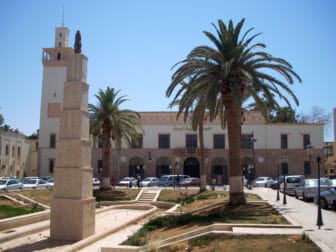
Small Grantee Feature: Expanding Opportunities for Libyan Higher Education
March 28, 2016 Interview with Amal Elobeidi, participant in Hollings Center small grant project Last spring, two participants from the Hollings Center’s dialogue conference, “Expanding Opportunities for Libyan Higher Education,” completed a small grant project that brought two Libyan academics to Pomona College in California. The trip aimed to build linkages between Libyan and American […]

Higher Education Policies and Overeducation in Turkey
March 2016. In Spring of 2015, the Hollings Center organized a conference entitled, Bridging the Disconnect Between Education and the Economy, exploring the breakdown between higher education and the labor market. Out of this conference, we supported a small grant for two participants to explore this phenomenon in greater depth in the context of Turkey […]

Protecting Cultural Heritage in Conflict: A Dialogue on Emergency Efforts
For any observer of Taliban reign in Afghanistan, the images of the collapsing Bamiyan Buddhas in 2001 must be emblematic of the high price of war and extremism on humankind’s common cultural past. Likewise, for the current generation that is witnessing one of the worst humanitarian disasters in history, the explosion of Palmyra is an […]
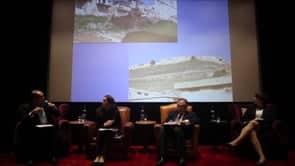
Preserving Cultural Heritage in Conflict
The deliberate targeting of cultural heritage in times of war and conflict is damaging on many levels: it robs countries of their past and impoverishes our shared heritage. What actions can be taken to mitigate the destruction? On October 15, 2015, the Hollings Center hosted a panel discussion entitled, “Preserving Cultural Heritage in Conflict” to […]
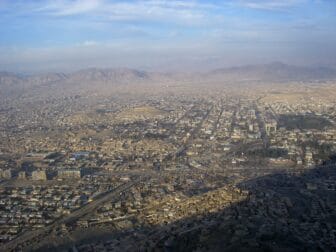
Afghanistan 2015: From Transition to Transformation
At the start of 2015, it became readily apparent that Afghanistan will undergo significant transformations in the coming years. The United States referred to the year 2014 as a “transition” point for Afghanistan, as the International Security Assistance Force’s (ISAF) drawdown of forces shifted more of the security and economic responsibility to the Afghan government. […]

Bridging the Disconnect between Education and the Economy
Exploring the link between higher education and economic growth post-2008 crisis, youth unemployment, and brain drain in Muslim-majority countries.