


Oral History in the Middle East and Central Asia
How can we deploy oral history more globally to sustainably foster partnerships and exchanges of ideas across international and cultural boundaries? How can digital technology make oral history more of a public resource in the Middle East, Central Asia and the United States? What are the benefits and limitations of using memory to diagnose and […]
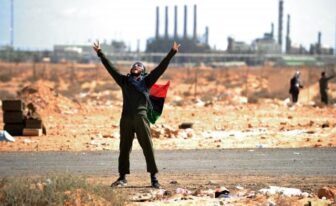
The Economies of the Arab Spring
October 2011 Until recently, the economic dimensions of the Arab Spring have played second fiddle to high-order political issues. Policymakers and pundits have focused much more on the posturing of the Supreme Council of the Armed Forces (SCAF) in Egypt or on debating whether an Nahda will upend the secular order in Tunisia. Less attention […]

The Future of Afghan-U.S. Relations: Development, Investment, and Cultural Exchange
Afghan-U.S. relations are entering a new and uncertain period. While many U.S. policymakers are buoyed by the death of Osama Bin Laden in Pakistan and focused on completing the troop drawdown in 2014, there is no clear vision of what America’s future engagement with Afghanistan will look like. The sole certainty is that the United States […]
Quality Assurance in Higher Education: An International Dialogue on Progress and Challenges
[doc id=17153]Today, with the effects of globalization and with dramatically expanded access to higher education, the quality of education has become more crucial for national development and competitiveness as well as for individual success. The rise of cross-border education, including branch campuses, student and faculty mobility, and partnerships between universities in different countries, also raises […]
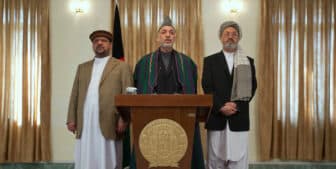
Fundamentals of Governance in Afghanistan
June 2009 [doc id=17156]Afghanistan’s 2004 Constitution revived a system of highly centralized government with a strong presidency. Six years later, it is apparent that this arrangement is failing on many counts. The Hollings Center for International Dialogue and the American Institute of Afghanistan Studies (AIAS) convened pre-eminent experts from Afghanistan, Europe, Turkey, and the United […]
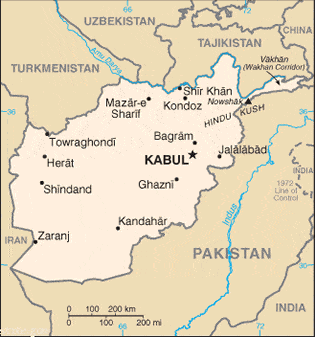
Afghanistan’s Other Neighbors: Iran, Central Asia and China
July 2008 This dialogue conference focused on Afghanistan’s significant economic, cultural, and political relationships with its neighbors in the region beyond Pakistan. Scholars, experts, and policy professionals from Afghanistan, the Central Asian Republics, the European Union, Turkey and the United States addressed Afghanistan’s impact on its neighbors, the significance of trans-national ethnicities and the effects […]
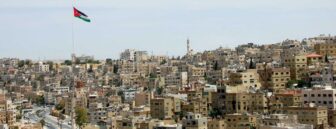
Expanding U.S. Study Abroad in the Arab World: Challenges and Opportunities
March 2008 Held at Al-Akhawayn University in Ifrane, Morocco, in cooperation with the Institute of International Education (IIE), this dialogue provided new perspectives to one of the fastest-growing areas of higher education. Participants discussed how to create more diverse study abroad programs throughout the Arab world, enhance the capacity of Arab universities to host U.S. […]
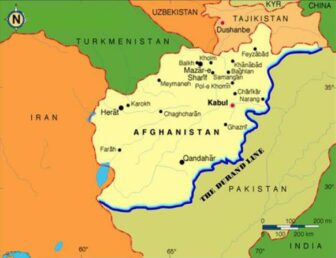
The Durand Line: History, Consequences, and Future
July 2007 The Durand Line, the border between Afghanistan and Pakistan, has long been the site of more conflict than cooperation. This dialogue brought together leading scholars, policy experts, and officials from Afghanistan, Pakistan, the United States and several European countries to focus on the political and legal history of the boundary, its social and […]
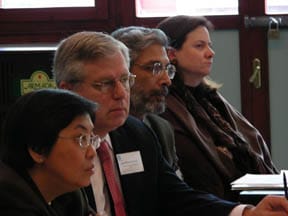
Independent Universities in the Muslim World: A New Approach, Part II
January 2007 Building on the December 2005 conference, participants in this second dialogue delved deeper into topics relating to curricula, standards of excellence, philanthropy, best practices, and international cooperation between independent universities. Participants included presidents and administrators of higher education institutions in Afghanistan, Bangladesh, Egypt, Indonesia, Iran, Jordan, Kuwait, Lebanon, Malaysia, Morocco, Pakistan, Palestine, Saudi […]
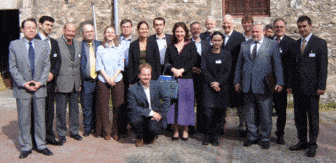
The Future of the Caspian Sea
May 2006 Unresolved questions of boundaries and legal regimes hinder ties between states bordering the Caspian Sea. Dialogue participants explored potential areas of collaboration, addressing pollution, protecting fisheries and promoting maritime trade. In cooperation with the International Institute of Applied Systems Analysis (IIASA) in Austria, the Hollings Center convened the conference with representatives of four […]